Influencer Marketing Done Right: What Brands Should Know Before Starting
Influencer marketing for brands can be powerful, but only when it is planned and managed properly. It is not just about finding someone with a large following and asking them to post about your product.
A strong influencer campaign starts with the right strategy, the right creators, clear communication, and realistic expectations. When those pieces are missing, brands often spend money, send products, or launch campaigns without seeing meaningful results.
Before starting, it helps to understand what influencer marketing can actually do, what it cannot guarantee, and what makes a campaign worth running.
What Influencer Marketing for Brands Really Means
Influencer marketing is a partnership between a brand and a creator who already has trust, attention, and influence with a specific audience.
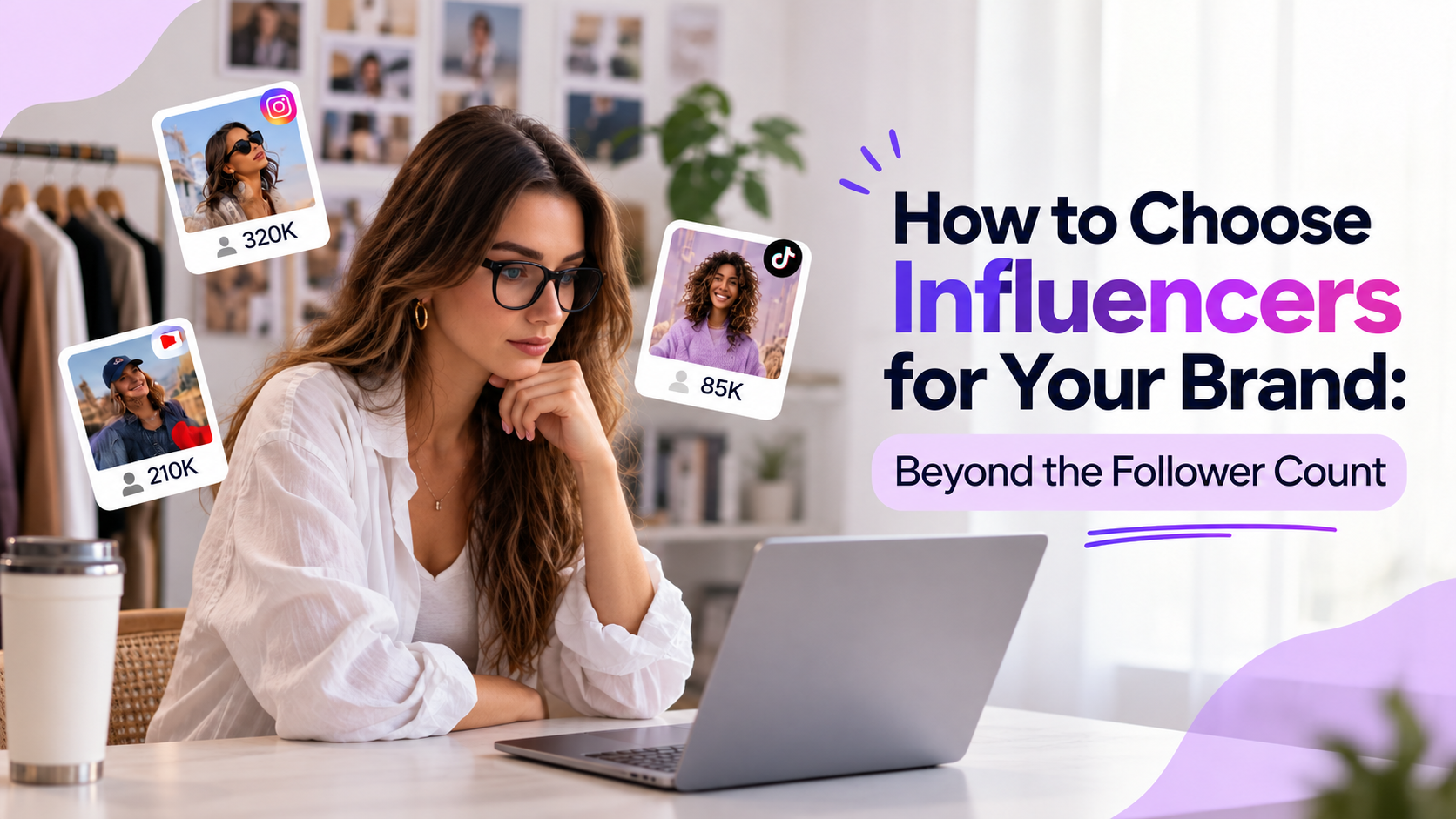
That audience may be large, but size alone is not the most important factor. A creator with 30,000 highly engaged followers in the right niche can often be more valuable than a creator with 500,000 followers who does not match the brand, product, or audience.
Good influencer marketing is about finding creators who can introduce your brand in a way that feels natural, believable, and relevant to their audience.
For brands, this can support different goals, including:
- Brand awareness
- Product launches
- Creator content
- Website traffic
- Affiliate sales
- UGC for organic or paid social
- Long-term creator relationships
The right campaign type depends on your product, budget, timeline, and what you want the campaign to achieve.
What good influencer marketing looks like
A successful influencer campaign usually has a clear process behind it. It should not feel random or rushed.
Good influencer marketing includes:
- Clear campaign goals
- Careful creator research
- Audience and content fit checks
- Personalized outreach
- Clear deliverables and timelines
- Fair negotiation
- Content review before posting
- Tracking, reporting, and follow-up
When these steps are managed properly, the campaign has a much better chance of producing useful content, real audience interest, and measurable campaign insights.
The goal is not just to “get posts.” The goal is to build creator partnerships that make sense for the brand and create content that can actually support growth.
What brands often get wrong
One of the biggest mistakes brands make is choosing creators only by follower count. A large audience can look impressive, but it does not always mean the audience is relevant, engaged, or ready to take action.
Another common mistake is sending generic outreach messages. Creators receive many collaboration requests. If the message feels copied, unclear, or too vague, it is easy for them to ignore it.
Brands also struggle when they do not have a clear brief. If the creator does not understand the product, the campaign goal, the required deliverables, or the message, the final content may not match what the brand expected.
Other common mistakes include:
- Not checking audience location or demographics
- Not reviewing recent engagement quality
- Expecting guaranteed sales from one post
- Not following up with creators
- Not tracking links, codes, content, or results
- Treating influencer marketing as a one-time transaction
Another thing brands should not overlook is disclosure. For paid collaborations, creator content should include clear disclosure when required. The FTC has helpful guidance on influencer disclosures.
Why creator fit matters more than follower count
The right creator should match the brand beyond surface-level numbers.
Before reaching out, brands should look at the creator’s content style, audience, tone, posting habits, engagement quality, and previous brand collaborations.
A good creator fit means the product feels believable on their page. Their audience should be able to understand why they are talking about the brand and why it matters.
For example, a beauty product does not need just any lifestyle creator. It needs someone whose audience cares about beauty, self-care, routines, product recommendations, or a related lifestyle topic. The closer the creator’s content is to the brand’s target audience, the stronger the campaign fit becomes.
This is why creator research and vetting are so important. The better the match, the more natural the content feels.
Choosing the right campaign type
There is no single influencer marketing strategy that fits every brand. Different campaign types serve different goals.
Paid collaborations are usually best when the brand wants guaranteed deliverables, clearer timelines, and more control over the content structure.
Gifted collaborations can work well for product-based brands that want to build awareness and creator relationships, especially when the product has strong visual appeal or clear value.
Affiliate partnerships are useful when the brand wants performance-based growth through discount codes, tracked links, and longer-term creator relationships.
UGC campaigns are focused more on content creation than audience reach. These are helpful when a brand needs videos, hooks, product demos, testimonials, or creative assets for organic and paid social.
Social media management can support influencer campaigns by reposting creator content, tagging creators, organizing posts, and keeping brand channels active with campaign content.
The best approach depends on the brand’s goals. Some campaigns need one type of collaboration, while others work better with a mix of paid, gifted, affiliate, and UGC creators.
Why campaign management matters
Finding creators is only one part of the process. The campaign still needs to be managed properly from start to finish.
That includes outreach, follow-ups, rate negotiation, contracts or agreements, campaign briefs, content review, posting dates, tracking links, performance notes, and reporting.
Without campaign management, important details can easily get missed. Creators may delay posting, content may go live without review, links may not be tracked, or the brand may not know which creator performed best.
A structured process keeps the campaign organized and helps brands make better decisions for future collaborations.
What brands should prepare before starting
Before launching an influencer campaign, brands should be ready to share a few important details:
- Website or product page
- Campaign goal
- Target audience
- Preferred platforms
- Budget range
- Timeline
- Product details
- Previous influencer or UGC experience
- Any content examples or brand guidelines
The more context the brand provides, the easier it is to recommend the right campaign direction.
Influencer marketing for brands works best when both sides understand the goal from the beginning.
Final thoughts
Influencer marketing can help brands grow, but it needs more than a list of creators. It needs strategy, careful research, strong communication, content direction, and ongoing campaign management.
The best campaigns are built around the right creators, the right audience, and a clear process from first outreach to final reporting.
If your brand is thinking about influencer marketing but you are not sure where to start, the first step is to share your goals.